SERVICES
Oil&Gas Services


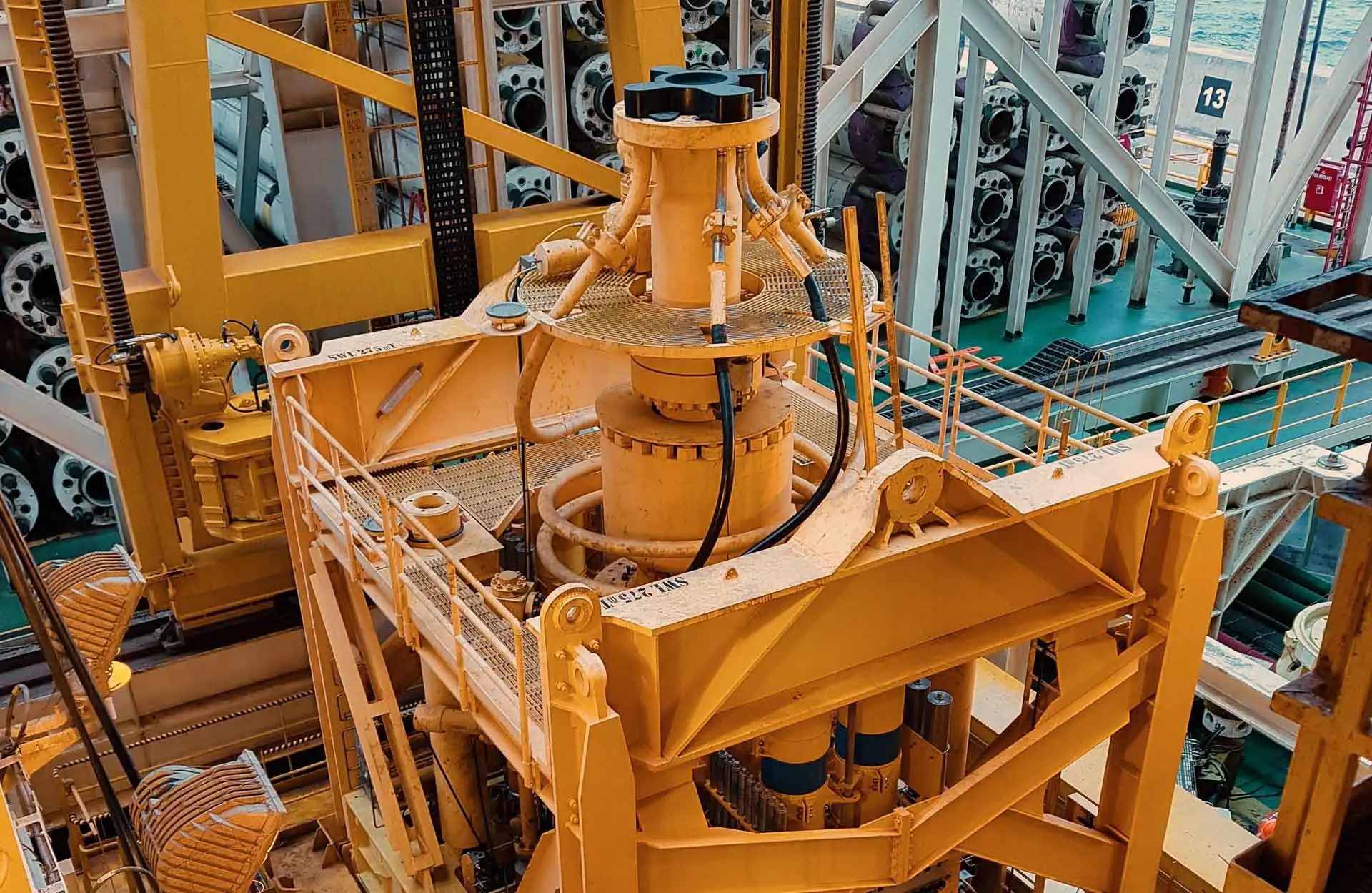
We deliver integrated engineering and project solutions for the oil & gas industry, from surface facilities and subsea layout design to FPSO/platform adaptations, process optimization, and low-carbon innovations to support the energy transition.
Structural engineering for industrial buildings and process facilities, sized for heavy-duty operations and the real loads of oil and gas plants.
Piping, valves and tie-ins for onshore production. Layouts that account for maintenance access, future expansion and operational reality, not just nominal flow.
Structural equipment for subsea production fields. We engineer the components that anchor a development on the seabed and survive 25 years of operation.
Wellhead and Christmas tree systems for surface and subsea applications, plus workover and intervention equipment that operators actually use day to day.
Topside and subsea control systems, sensors and power distribution. The intelligence layer that makes the rest of the field measurable and controllable.
Umbilicals and risers for transporting fluids, signals and power between seabed and topside. Configuration, routing and installation engineering for the harshest environments.
Independent third-party verification of subsea equipment before it goes underwater. From factory acceptance testing to in-service inspection plans, we run programs that catch problems on land, not 1,500 meters down.
Applied research and development for upstream and downstream operations. We work with operators to qualify new technology, run pilot programs and de-risk innovation before it touches production.

How +NR approaches decisions on real oil and gas projects: methodology, scope, technology qualification and trade-offs.
We apply INCOSE stakeholder analysis and concept-of-operations development to understand the operator's actual constraint: is it schedule, capital, regulatory, or operability? The scope follows from there, structured around top-down requirements analysis. A field development driven by an early production date looks very different from one driven by capex limits. Getting this clear in the first 2 weeks through structured gate reviews avoids 80% of the rework that happens later.
We apply INCOSE V-Model verification and validation against the existing hull and systems as immovable constraints, designing new modules to fit within them through design readiness reviews. This sounds obvious, but most FPSO modifications run over budget because new equipment is sized for ideal layouts and then forced into available deck space. Our requirements traceability discipline ensures we size for what is actually there from day one.
Field maturity is not a technical problem, it is an economic one. We apply INCOSE trade studies to model the remaining production profile against capex, opex and decommissioning timelines, then engineer interventions that pay back inside the production envelope. Sometimes that means new wells; often it means optimizing what is already there. The engineering follows the economics through structured value engineering, not the other way around.
Always before installation, and selectively in service. We apply INCOSE V-Model V&V principles: Factory Acceptance Testing catches manufacturing issues, System Integration Testing catches interface problems between subsystems. In-service inspection makes sense for components with known degradation modes (umbilicals, flexible risers, mooring lines), less so for static equipment that rarely fails. Choosing where to spend inspection budget is part of the engineering trade study.
Through structured technology qualification programs aligned to DNV-RP-A203 or API 17N, with clear INCOSE-style gates between TRL stages. We work with operators to define the qualification target, design test programs, run pilots and document evidence within an ISO 9001:2015 quality system. The output is something an operator can present to internal review boards and put on a production asset, not a research paper.
Most engagements run as either FEED (Front-End Engineering Design, 4 to 9 months, INCOSE-structured) or EPCM (12 to 36 months, PMBOK-managed). Conceptual studies are 6 to 12 weeks. Operators that engage the same team across FEED and EPCM tend to see less rework, because design intent is preserved through V-Model verification. We work in any configuration the operator needs, with the same methodology applied consistently.
We use INCOSE Systems Engineering as the design discipline (requirements traceability, V-Model verification and validation, MBSE, FMEA for risk-critical components) and PMBOK as the project management discipline (WBS, performance baselines, change control boards). Continuous improvement is governed through CMMI and ISO 9001:2015. The combination is what we call the +NR methodology, described in detail on our methodology page, and it is applied identically to subsea, FPSO modifications, mature field revitalization and downstream R&D engagements.