
Global Overview of Rare Earths
Rare earths are a group of 17 chemical elements essential for advanced technologies in sectors such as electric vehicles, renewable energy, electronics, and defense. Their uses include high-performance magnets, phosphors for displays, and industrial catalysts. Demand is rapidly growing, driven by the global energy transition and technological innovation.
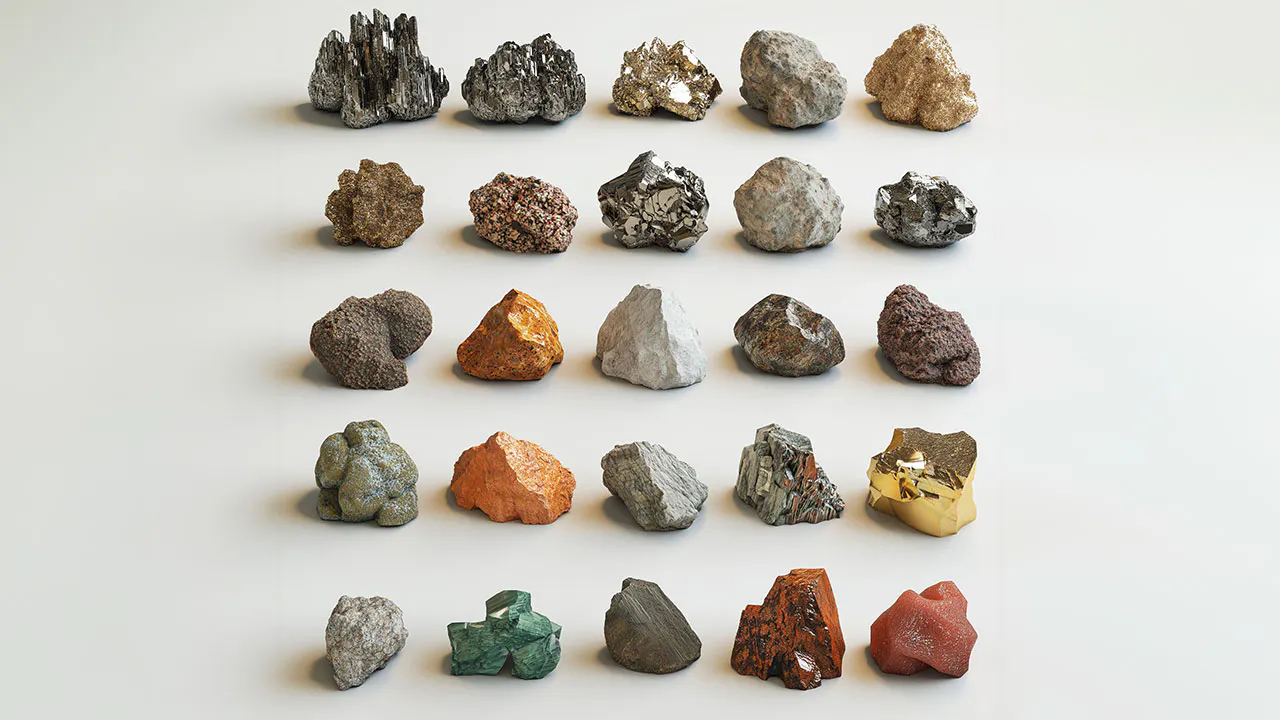
(Rare Earth Mineral)
Current Situation and Vulnerabilities
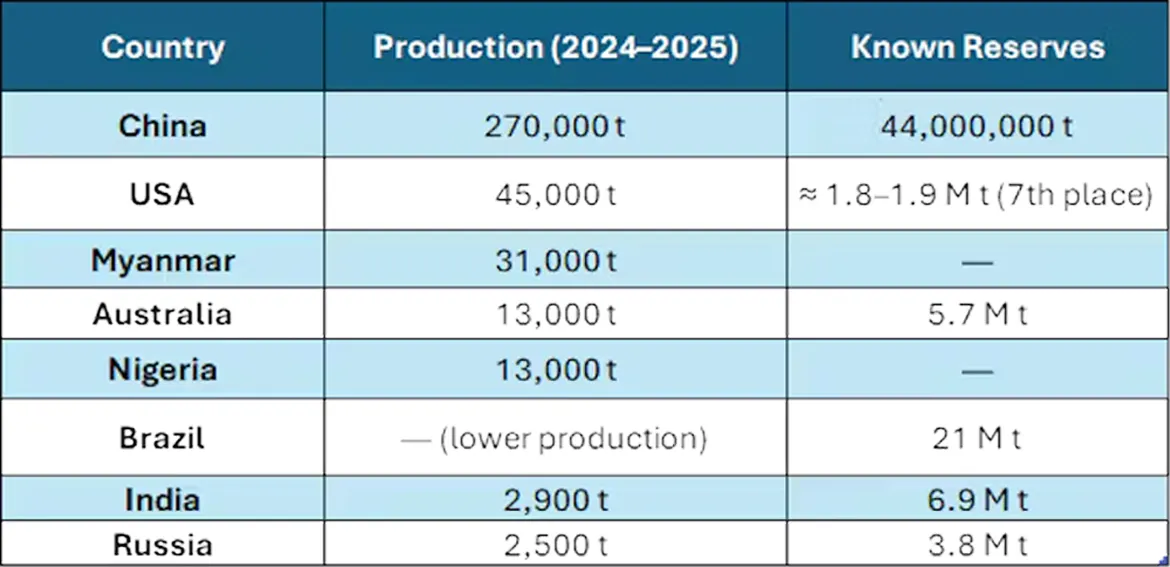
Global production is highly concentrated, with China dominating about 70% of supply and reserves. The United States, Myanmar, Australia, and Nigeria are also important producers, while Brazil stands out for its vast reserves, the second largest in the world, although with lower production, representing a strategic opportunity for diversification and supply security.
Global Production – Top 5 Countries (2024–2025):
- China – Approximately 270,000 metric tons.
- United States – About 45,000 metric tons.
- Myanmar – Around 31,000 metric tons.
- Australia – Roughly 13,000 metric tons.
- Nigeria – Close to 13,000 metric tons.
Known Reserves – Top 5 Countries:
- China – 44 million metric tons.
- Brazil – 21 million metric tons.
- India – 6.9 million metric tons.
- Australia – 5.7 million metric tons.
- Russia – 3.8 million metric tons.
Applications and Market Growth
The global rare earth market is expected to grow between 5–7% per year over the next decade, driven by the automotive industry (electric vehicles), wind energy, advanced electronics, and emerging technologies that rely on these critical elements, such as artificial intelligence and quantum computing.
Rare earth use is closely tied to major technology and energy trends:
- Automotive sector: EVs may require about 1 kg of rare earths (Neodymium, Praseodymium) per vehicle, mainly for electric motors.
- Renewable energy: Wind turbines, especially permanent magnet types, rely heavily on rare earths.
- Electronics: TVs, smartphones, computers, and LEDs increasingly use critical materials such as Terbium and Dysprosium.
Strategic Opportunities and Technical Challenges
Developing rare earth capacity involves:
- Geological exploration: Identifying promising deposits, mapping, and mineralogical analysis.
- Beneficiation processes: Extraction, chemical separation, and refining require advanced technical expertise and strict environmental controls.
- Green technology: Low-impact extraction and processing methods (including e-waste recycling and less aggressive reagents) are gaining traction.
Socioeconomic and Environmental Benefits
The strategic exploitation of rare earths can reduce external dependence, strengthen local industry, create skilled jobs, and promote environmental innovation through circular economy and sustainable practices, contributing to technological autonomy and regional development.
Conclusion and Global Expertise
The growing demand for green technologies and innovation makes rare earth elements not only valuable but strategic for the energy and industrial future. Mastering their exploration and processing is essential to ensure resilience, competitiveness, and sustainability.
+NR is fully engaged and prepared to operate aligned with global needs in this challenging scenario. With extensive technical experience, we offer comprehensive support for feasibility studies, incorporating geological analyses, advanced processing techniques, economic assessment, and modern environmental solutions.
Thus, our support in reopening and developing new mines, aligned with sustainability, technological innovation, and socio-environmental responsibility, makes us the ideal strategic partner. We contribute to expanding Brazil’s global presence in the rare earth value chain, all with a holistic approach focused on solid, responsible, and sustainable results.
In this context, we highlight our true strength: with broad experience and deep global knowledge, we are ready to support feasibility studies in this area in a comprehensive and technical manner.